Tunde
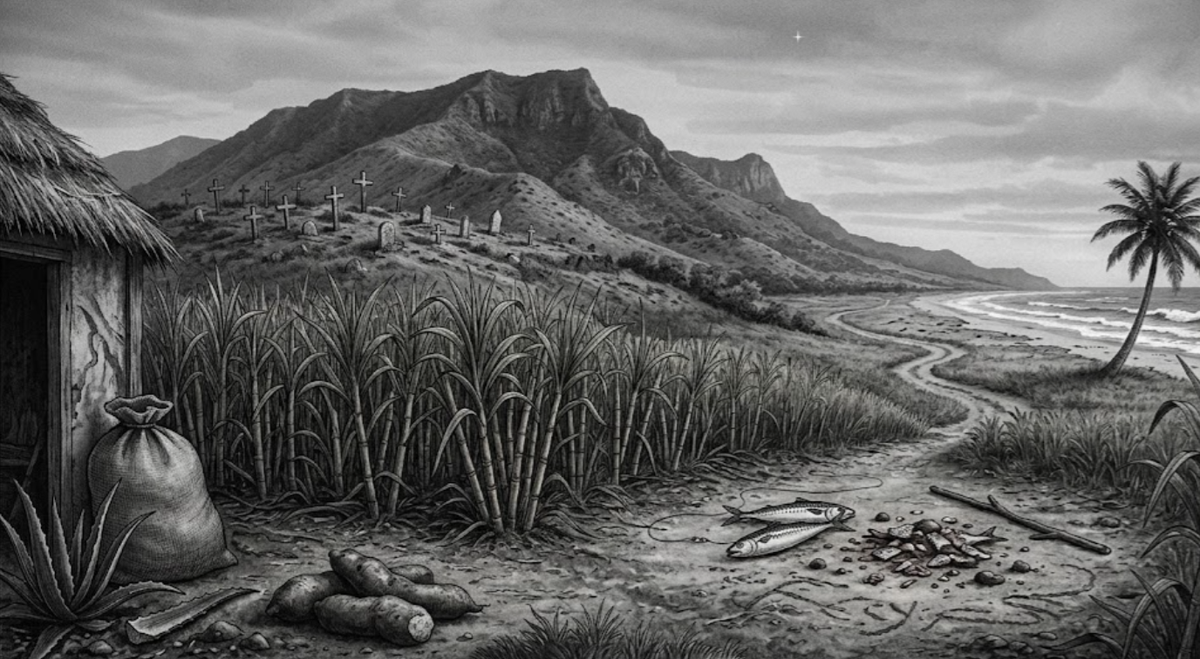
The girl who spent the last seasons of her youth exchanging winks with Jamari faded. Her feet became as calloused and rugged as tree bark—her legs, long and coarse. Her muscles burned, swinging her blade with sweat. A swollen belly tormented her.
Eban ridiculed Ife for her constant squatting. “No man will touch you now,” he told her.
Vomit soaked into her braids and her back ached, but she chopped cane through morning sickness and hunger, pushing past exhaustion to keep her promise to Omotola.
During the end of her term she resisted the urge to sleep on her side and let her back go numb. Then she toiled every day under a hot glare.
But the first time Tunde moved inside her, she understood the power Omotola and Auntie had told her about. When Tunde wailed his way from her womb, Ife cried with delight. She swaddled Tunde in burlap and cradled her baby boy smiling at his sleeping coos.
She hacked her way through the harvest season with Tunde in a sling. The other workers kept watch while Ife snuck in between the rows to nurse—whistling when Eban rode past.
Auntie moved into her hut. Ife’s neighbors offered their rations so she could nurse, and she shared her milk with another young mother who couldn’t produce. With help, Ife kept Tunde clothed and fed. Nobody said anything about Tunde’s blue eyes, a constant reminder of the debt she paid in the dark. He was Ife’s.
She took her son to the beach where he laughed and ran from the sweeping tide. Waves washed away and new waves were born again. She skinned an aloe leaf and spread its pulp on herself and Tunde. The leaf’s bitter nectar still made her spit.
Tunde rapidly outgrew his bathing cask. Auntie suggested Ife teach her son how to wash himself, but Ife disagreed; the boy had just learned to go away from the hut and bury his stool.
When he stopped wearing his tailclouts, Auntie stiched him a small pair of breeches that fell past his knees. Ife pulled the breeches on Tunde every morning and then tickled him until their cheeks ached. She hummed during the day, pacing her machete swing and singing in the grassland—soaking every ray of sunlight before the shadow of the night took her.
When the sun went behind the big green mountain, Auntie cooked for the three of them—yams boiled over the fire.
Just over the ridge, the shallow graves loomed in the dark silhouette of the mountain. Jamari, captured within days of her mother’s passing, lay there next to Omotola. Ife could still hear the flintlock and smell its powder, reminding her that escape meant death.
Down by the fire, Tunde sat in the dirt with a stick drawing lines in the earth. Ife pointed at her little boy’s dirt picture.
“What is that?”
He drew crude squiggles in the dirt and said, “Fish.”
“‘Tis a nice fish, Tunde mi.”
But Tunde never looked up, fixated with his drawing, his dirt fish. Ife bent down and grabbed a stick of her own.
When she assisted Tunde with his drawing, the little boy fussed, “Mama, No!” and frowned.
Auntie laughed. “Be careful Ife mi, he may swat you.”
Two men stopped by their fire carrying a string of fish. “Nice yams,” one said.
“Nice fish,” Ife replied. She presented the men with three large yams. They handed over two mackerel and went about their way.
“Tunde look,” Ife said.
Her little boy gazed wide-eyed. His cheeks fell and his mouth opened. He laughed and yelled, “Fish, mama! Fish!”
Stumbling over to Ife’s leg, he embraced her—looking up at the mackerel still wet with ocean brine. Ife beamed.
“Child, tonight we feast!” Auntie said.
Ife cleaned the fish. Tunde made a sour face when she cut off the head and the fins. The flame crackled while Auntie stirred the pot of yams. Tunde scrunched his face when Ife sliced the fish belly and pulled out the innards.
“Give me your hand, Tunde mi,” Ife said.
Tunde shook his head.
“Go on child. Give mama your hands.” Auntie grinned.
Tunde put his hands behind his back. Ife cocked her head and gave him a stern look, “Tunde, your hand.”
He held them out with his eyes squeezed shut. When Ife dropped the fish guts into his small hands, he gasped. Hhuuh! He opened his eyes and squirmed, squealing at the slimy goop.
“Put that in the dirt for the maize,” Auntie told him.
He carried it to the garden and smooshed the fishy sludge into the soil. When he returned, grime covered his hands.
“That is the thing for boys, Ife mi. No shame for filth,” Auntie said.
Ife bent down. “What is the matter, child? But for those hands.”
Oily dirt clumps covered his palms.
“Wipe it in the grass, Tunde. Now!"
They feasted on fish and yams around the fire. Auntie told stories until Tunde dozed, slobbering slightly, sprawled on the ground.
In the night the cricket chirp and coqui whistle lulled them under the distant roll of breaking waves. Ife laid on her pallet, sore and weary, drifting in and out of a dream wit’s the sound of the surf.
Then Richard Whistler’s voice called out in the dark.
“Ife, come.”
Ife roused and checked on Tunde. Auntie stirred awake.
“Ife, come now,” Whistler hissed.
He led her away from the Narrows into the darkness. Down by the beach, he forced her to lay next to the big palm tree—the same place she had laid the night before. And the night before.
© 2026 All Rights Reserved. ThePiratess.com