Chronicle Notes: PART IV - The Packet & The Ice
"The frost is so intense here that the ink freezes in the horn while I write... neither rum nor fire can pierce the damp of this cursed northern channel." — Anonymous Log of a North Sea Merchantman, January 1781
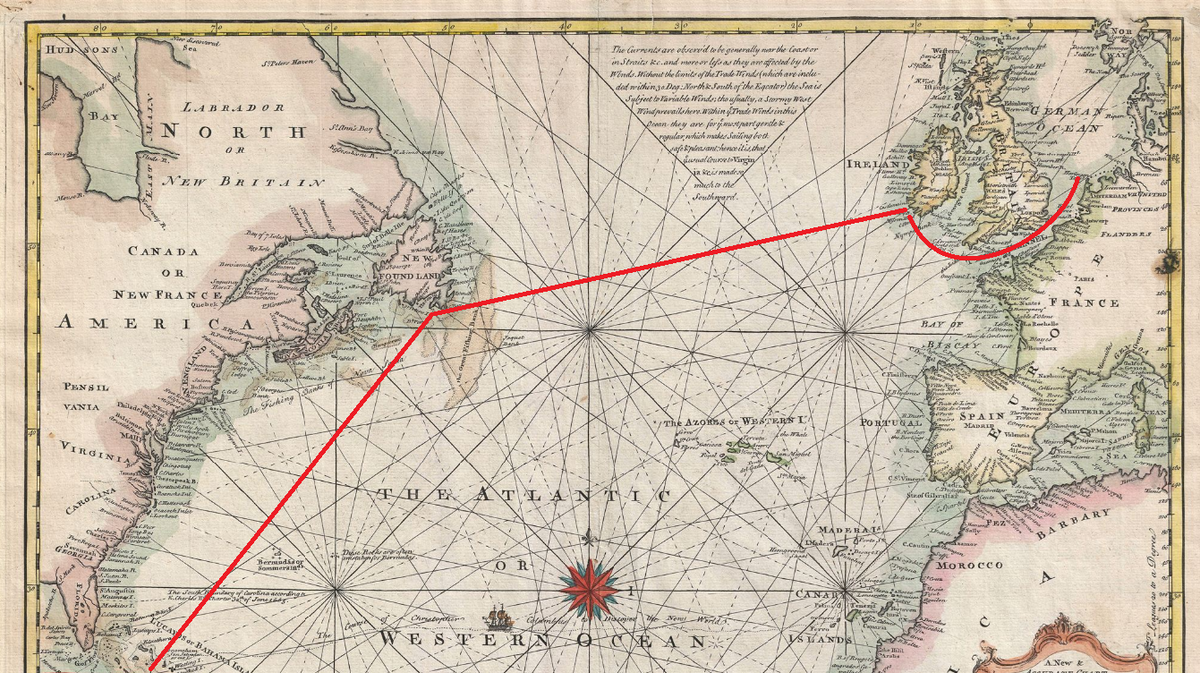
- Temporal Scope: Approx. November 1780 – January 1781.
- The Setting: The northern Atlantic, its ice fields and the British blockade.
- The Context: This fourth volume captures the grueling northern arc of Ife’s journey from the seizure of the Wilmington Packet, through a brutal transatlantic crossing choked in ice and storms before culminating in a British marine boarding and the final descent into a frozen harbor at the edge of her world.
The Fourth Anglo-Dutch War
By the time Ife departed Amaguya, tension between the British and the Dutch had escalated into the Fourth Anglo-Dutch War. Because the Dutch had allied themselves with the rebel American colonies, British seizures of Dutch shipping were commonplace and mentioned specifically by Van Vries once aboard the Wilmington Packet.
Britain officially declared war on the Dutch Provinces in December 1780, primarily because of Dutch covert arms-smuggling out of St. Eustatius and their commercial treaties with the American rebels.
England actively patrolled the Dutch coast and locked down European approaches. The boarding of Lt. Sparding of the HMS Athena fits standard interception patterns for ships heading toward Northern Europe.
Of course this global conflict between nations meant nothing to a mother trying to stay afloat long enough to get back to her son.
The Wilmington Packet
The merchant schooner Wilmington Packet, smuggling arms from the port of St. Eustatius, a primary covert conduit between the Yankees and the Dutch Republic, carried the exact contraband sought by the Royal Navy.
The skirmish between Van Vries, a Dutch captain commanding a mixed crew of English, Irish, Spanish, and African sailors, caught the merchantmen completely off guard. While their standard operational risk in these waters was the seizure of cargo by British cruisers, they instead met a swift and total overthrow with half the crew slain and the survivors marooned on the outer cays of the Bahamas.
Under 18th-century maritime law, the actions Ife and her crew took to seize the Wilmington Packet, specifically killing and marooning, crossed multiple capital crimes according to both British Admiralty law and the general Law of Nations.
If caught by a Royal Navy captain like Lieutenant Sparding, Ife and her crew would not just face standard wartime prisoner-of-war status, they would be tried as pirates and felons, bypassing standard military exchange protocols straight to the gallows.
The Pursuit of La Real
It is speculated that the marooned Yankee sailors eventually found rescue, carrying word of the Wilmington Packet seizure and providing La Real with a fresh heading on Van Vries. The fact that a guardacosta vessel continued its pursuit deep into the northern Atlantic suggests Los Lobos had entirely abandoned their official crown duties, turning rogue bounty hunters in a desperate effort to reclaim the stolen gold for themselves. Under standard naval protocol during the war, a vessel of Spain’s Armada Real would have been ordered back to Cartagena rather than continue on a rogue private chase. This detail that nearly proves Los Lobos’ intent was greed rather than Crown service.
Saint Nicolaas Day (December 6)
Observed quietly aboard despite the surrounding frozen desolation, the feast of Saint Nicolaas offered a grim psychological anchor for a crew slipping deeper into winter peril. Rather than firing celebratory gun shots that might betray their position to Los Lobos, Van Vries instead offered a solemn, pragmatic prayer to the saint. It was a bleak ritual of survival, trading traditional holiday cheer for a protection plea against the weather and the enemy pursuers.
The Dice Game
Played with carved animal bones, Captain, Ship, and Crew served as a common maritime diversion to stave off cabin fever and settle petty wagers during long, brutal stretches at sea. The game required a strict sequential hierarchy, securing the captain, the ship, and the crew before scoring remaining cargo points which mirrored the command structure of life aboard a rogue vessel. When Van Vries finally confiscated and hurled the bone cubes overboard to silence the squabbling crew, he discarded their final makeshift distraction just as distant cannon fire signaled the closing net of Los Lobos.
The Ice
Winter crossings of the north Atlantic required navigating treacherous fields of pack ice, fogbanks, and low-profile growlers—massive chunks of glacial ice that sat low in the water and remained virtually invisible until a ship was upon them. In the dead of winter, freezing gales and dense fog routinely trapped unwary vessels, turning the northern shipping lanes into a white-out labyrinth of shifting floes. Pushed past the limits of seaworthiness by their obsessive pursuit, La Real and its crew ultimately fell victim to these conditions, shattered against an ice shelf while blinded by the very elements they braved to hunt Van Vries.
When the harbor at Amsterdam froze solid, ships and longboats were routinely hoisted onto horse-drawn sledges and hauled directly across the frozen waterways. Because standard navigation ground to a halt, cargo, casks and boats were transferred to runners and dragged across the ice sheets by teams of men and draft animals to reach the city. This transition from water to ice transit transformed the port into a sprawling, frozen thoroughfare where keels scraped over slush alongside local sleighs and skaters.