Machete
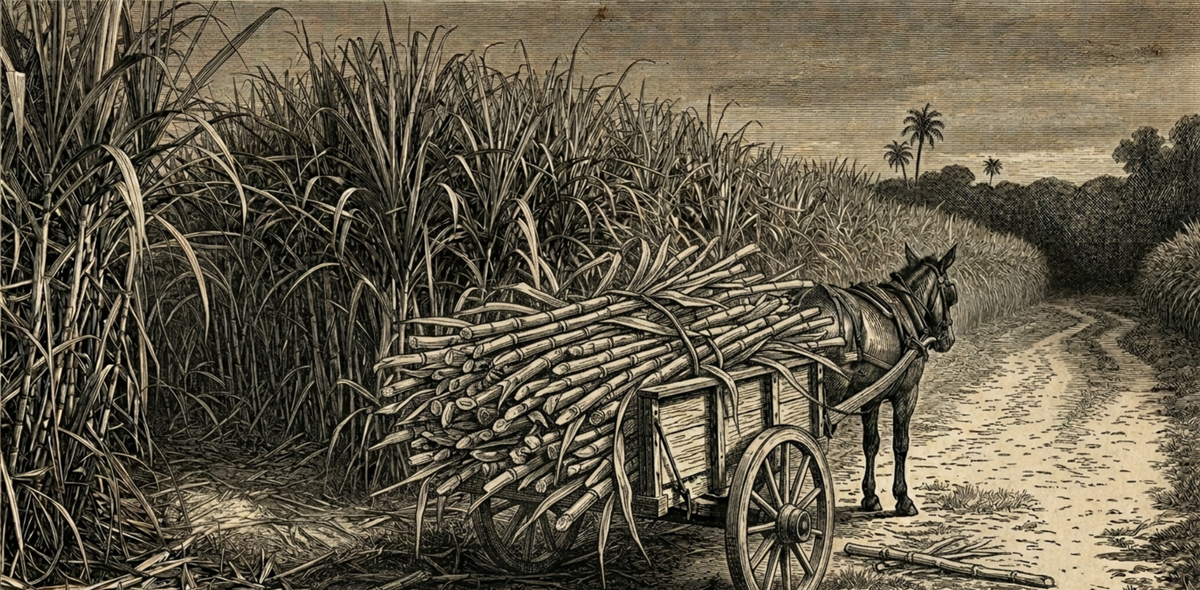
Cane leaves rustled in the thick, warm air. Her mother hummed over the breeze.
“Mama, why do they kill the man?” Ife asked.
Omotola tossed a heap of stalks into the mule wagon.
“Mama, why?”
Her mother did not look up from the row. “The man ran, Ife mi. And the English do not let a man run.”
Omotola stooped, then hurled another batch of stalk into the wagon bed with a hard, wooden thud. Ife climbed on the mule’s back, leaning over until she hung upside down from the animal’s neck. Her world flipped—-clouds on the ground, dirt in the sky. “Why, mama? Why kill the man for nothing?”
“Get down from there before Eban brings the whip.”
Ife slid down the mule’s shoulder. The beast swished its tail, chuffing a warm breath against her braids. “Eban will bring no whip, Mama. He is our uncle.” Ife raised her thumb toward the Carib overseer, sadling his horse at the end of the canerow.
Omotola stopped her tune. She caught Ife by the scruff of her neck, her fingers pinching tight. “Eban is not your uncle,” she scolded, her wagging finger nipped Ife’s nose. “He is a bad man. Worse than the English. If Eban see you on the ass, he will cut your skin. Now come, Ife mi. Pick up the cane.”
When her mother let go, Ife turned her face away, crossing her arms as the wagon squeaked past. Omotola resumed her humming. Ife dawdled behind, fetching straggled pieces of cane, skirting the splintered stalks.
“Mama, why do the English kill the man?” Ife asked once more.
Her mother stood straight, exhaling a long sigh as she heaved another bundle into the wagon bed. “Because that is the way, Ife mi. We are born, we work, and then we move on. Do not ask me again.”
Ife rubbed her neck where her mother’s grip had left a sting. All across the field, the steady thwack of machetes held a rhythmic beat against the cicadas. Chants rose as the crop fell. Omotola pulled a thick aloe leaf from her waistband and split the skin with her knife.
“Ife mi. Here.”
Ife smeared the sap over her palms before spreading it across her arms and face. Her mother did the same, coating their skin with a thin, oily shimmer. Ife tasted it on her lip, cringed at the bitter nectar, and spat. They gathered stalks until the bell finally rang, then supped rainwater collected from the day before.
The glare vanished from the bay, greying the water until the waves took on the shade of iron. Omotola stoked a small cooking fire outside their hut while the old woman they called Auntie boiled yams in a clay pot. Ife pulled roots from the small garden patch nearby and brought a yam to her mother, its skin caked in dark earth.
“Ife mi, ’tis a dirty yam from a dirty child,” Omotola said.
Ife shrugged and grinned. Soot streaked across her cheeks and smock. She brushed the largest clumps of dirt away and blew a sharp stream of air across the skin.
Omotola looked over her shoulder, hiding a smile. “Do you believe a child could bring such a nice yam, Auntie?”
Ife held out the yam, swaying her hips side to side.
“I remember when you washed her bottom in the sea,” Auntie chuckled from the fire.
“Aye, ’twas just yesterday,” Omotola agreed.
Ife shoved the yam into her mother’s hands. “Mama, stop.”
Two fishermen stopped by their hut, a string of fresh catch dangling from their hands.
“Nice yams,” one of the men said, raising an eyebrow at the pot.
“Nice fish.” Omotola handed them three of their largest roots.
The man unhooked two plump mackerel and passed them to Omotola. They exchanged quiet nods, and the men hobbled through the Narrows. Ife’s mouth watered at the silver fish hanging from her mother's hands.
“Child, tonight we feast!” Auntie fetched a knife, taking the fish from Omotola. “Ife mi, go for the lemon.”
She scurried to the grove near the big palm tree, plucked a yellow fruit, and sprinted back to the fire. Yams bubbled in a broth while Auntie sliced open the fish. Ife puckered her face as the knife took the mackerel’s head. Her mother shot her a smirk across the crackling flame.
Auntie scooped the dark innards from the belly. Ife bulged her eyes.
“Give me your hand,” Auntie said.
Ife shook her head hard, her braids slapping her shoulders.
“Go on, child. Give Auntie your hands,” Omotola winked.
Ife held out her arms and squeezed her eyes shut. A warm, sludgy ooze filled her palms. She peeked with one eye, gasped, and twisted her face away. The two women laughed, their voices carrying into the dark.
“Go put that in the dirt,” Auntie told her, wiping the brine on her tattered apron. “For the maize.”
Ife carried the slime to the garden patch, smashing it deep in the soil before wiping the grime on the grass. The cricket chirped and the coquí whistled. Ife fought sleep, captivated by the low murmur of her mother and Auntie’s lore. But her heavy eyelids and the warmth of the fire prevailed.
The sugar fell and rose with the seasons. Ife’s burlap smock grew tight, frayed, and vanished, replaced by the heavy wraps of a young woman. The iron blade in her hand shredded a swift path through the stalks.
Ife surged ahead of the line and Omotola shouted, “Ife mi, you work much. You will be sick.”
“Pfft.” Sweat poured down Ife’s cheek. She swung wildly, switching hands when they ached. Behind her, Omotola hummed a work tune. Through a haze of flying leaves and green tangled in her braids, Ife’s machete glided.
Gasps broke the chopping rhythm. Ife stopped and parted the stalks. A man lay in the silt between the rows. Eban’s horse pushed through the leaves, his voice slicing through the cane, “Get choppin’!”
The workers hacked faster. Their blades tore the sugar down with sharp, metallic clinks. But Ife stood still, peering between the leaves as Eban climbed down from his saddle and landed heavy in the muck. He rolled the body with his boot, muttered a curse, and grabbed a length of rope from his horse. As he knotted it around the dead man’s ankles, his eyes snapped up through the green, straight to Ife.
She stared him down, squeezing her machete handle tight. Eban marched past the flinging leaves and weeds and dirt, closing the distance. Ife’s body thumped—her fingers throbbed against the blade handle. His dirty knuckles cracked against her jaw. The strike knocked Ife to the muck. Her machete swept through the smothering heat and landed in the thicket. Eban stood over her, fists balled on his belt. A coppery spew wet her tongue and she spat. Red foam hit the soil. Ife wiped her mouth, snarling.
Omotola dropped her knife and ran over, “No Eban, please. She is sick from heat.”
Her mother knelt and held her shoulders.
“Your brat must work.”
“Aye. She is not well. We will work, Eban. Please,” Omotola hauled Ife up.
Eban latched his eyes on Ife as he strode back to his saddle. Ife kept a curled lip. He mounted his beast and dragged the body behind him. With bound ankles and limp arms, the fallen trailed through the dust like a snapped wishbone. A dirt path carved in his wake all the way from the canerows to the base of the mountain where the shallow graves loomed. Ife spat again.
Omotola seized Ife by the chin, “What is it, Ife mi? You must work. Eban will beat you.”
She scowled, jerking her face away from her mother’s grip.
“Ife mi, go for the water. Then come back and work.”
The bell rang. A young boy delivered pails of water from the creek near the mill. Over a hard biscuit and dried fish, Omotola took Ife’s blade to the grinding stone—a massive slab worn smooth by hands of the past. The raspy grind of metal on stone behind their hut resonated through the Narrows.
“You work angry, Ife mi.” Her mother ran the blade edge down the rock. “But spare your arm, for the cane does not care for your anger.”
After she scraped a final pass along the scarred stone, Omotola nudged her machete handle toward Ife and said, “Now come. A weak knife can make for blood.”
Ife pointed her machete across the bay. “Why not we go to that place? Why not we swim there?”
Omotola dropped her blade and her voice dropped to a harsh hiss. “There is the same. You can swim there and more English are there.”
“I want to go there. Tonight.”
“Child, you know not what you say. If you swim there they will drag you back by your hair. I know it is hard, Ife mi. But this is not all there is.”
Ife pursed her lips.
“Now come, make the knife strong.”
Omotola winked at her. Ife rolled her eyes and sharpened her machete.
© 2026 All Rights Reserved. ThePiratess.com.