Chronicle Notes: PART II - La Fortuna & The Atoll
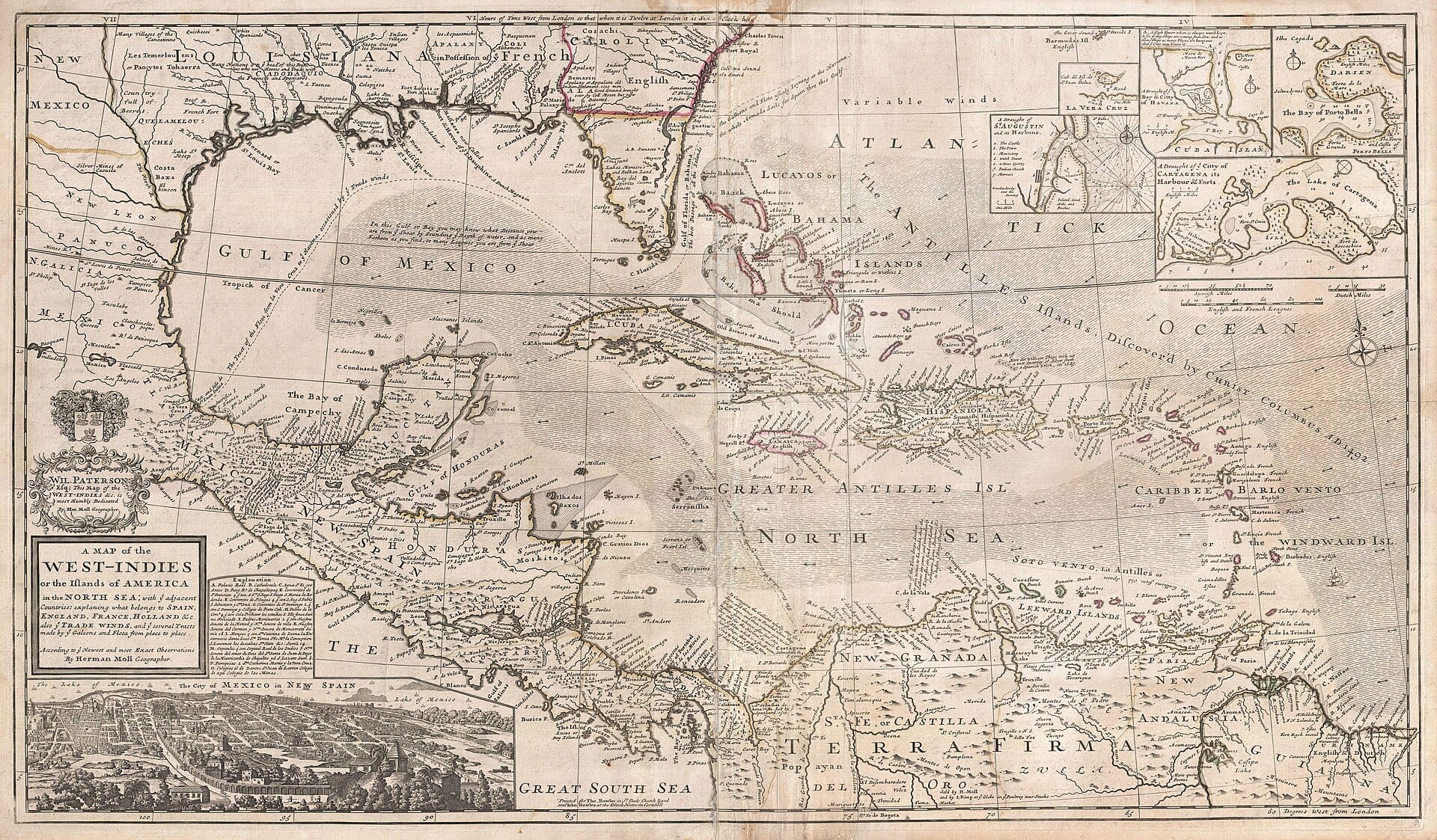
Historical research notes on the Great Hurricane of 1780, 18th-century nautical terms, and the flight of the sloop La Fortuna through the Mona Passage.
- Temporal Scope: Approx. October 1 – October 16, 1780.
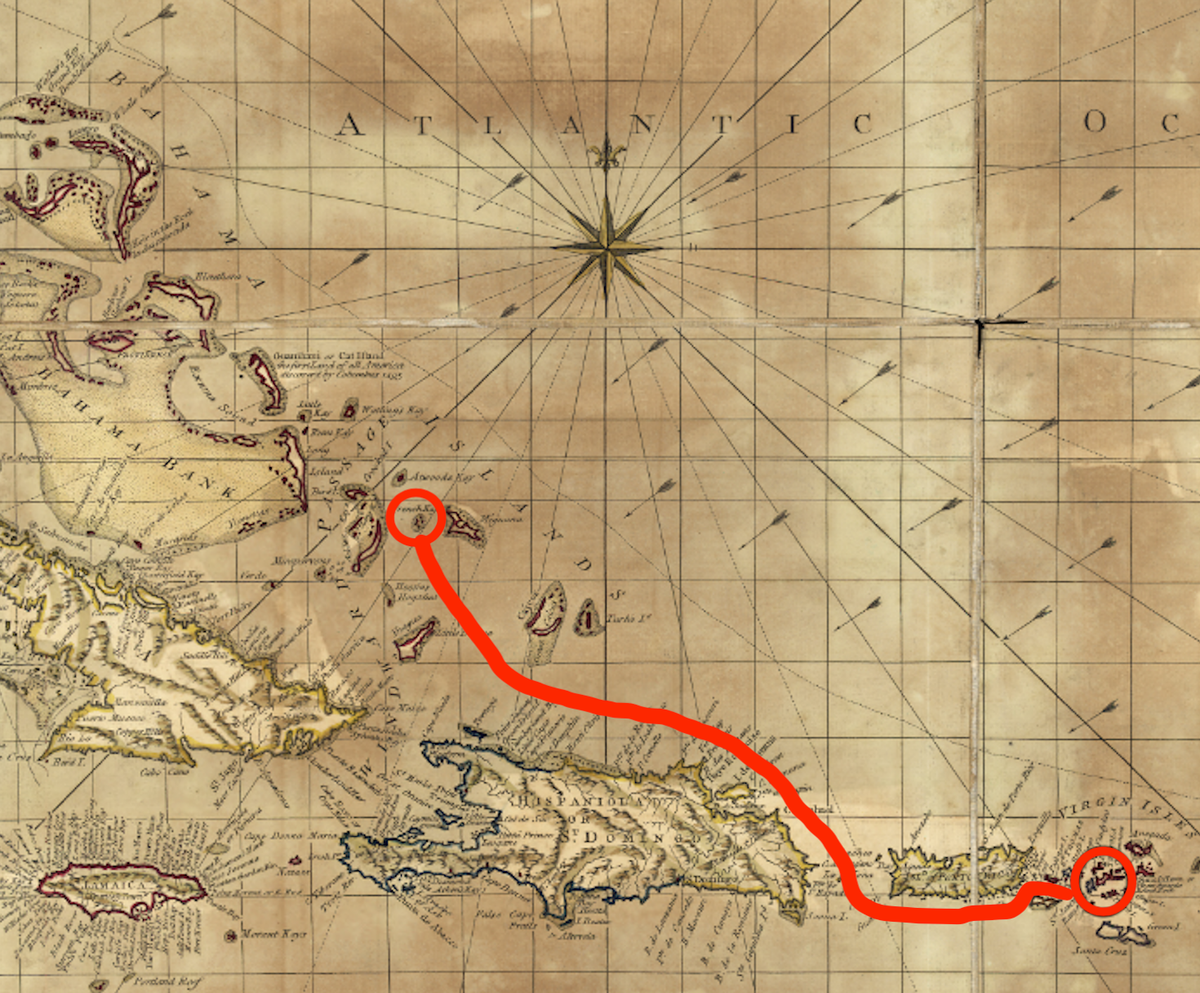
- The Setting: The open swells of the Caribbean Sea along the coasts of Porto Rico, Hispaniola and the uncharted reefs near Amaguya.
- The Context: This second volume captures the grueling transition of Ife’s journey—from a runaway fleeing the Whistler estate, through a pursuit across Spanish-patrolled waters, culminating in a grounding upon the shallows of the atoll just as the deadliest Atlantic hurricane in recorded history arrives.
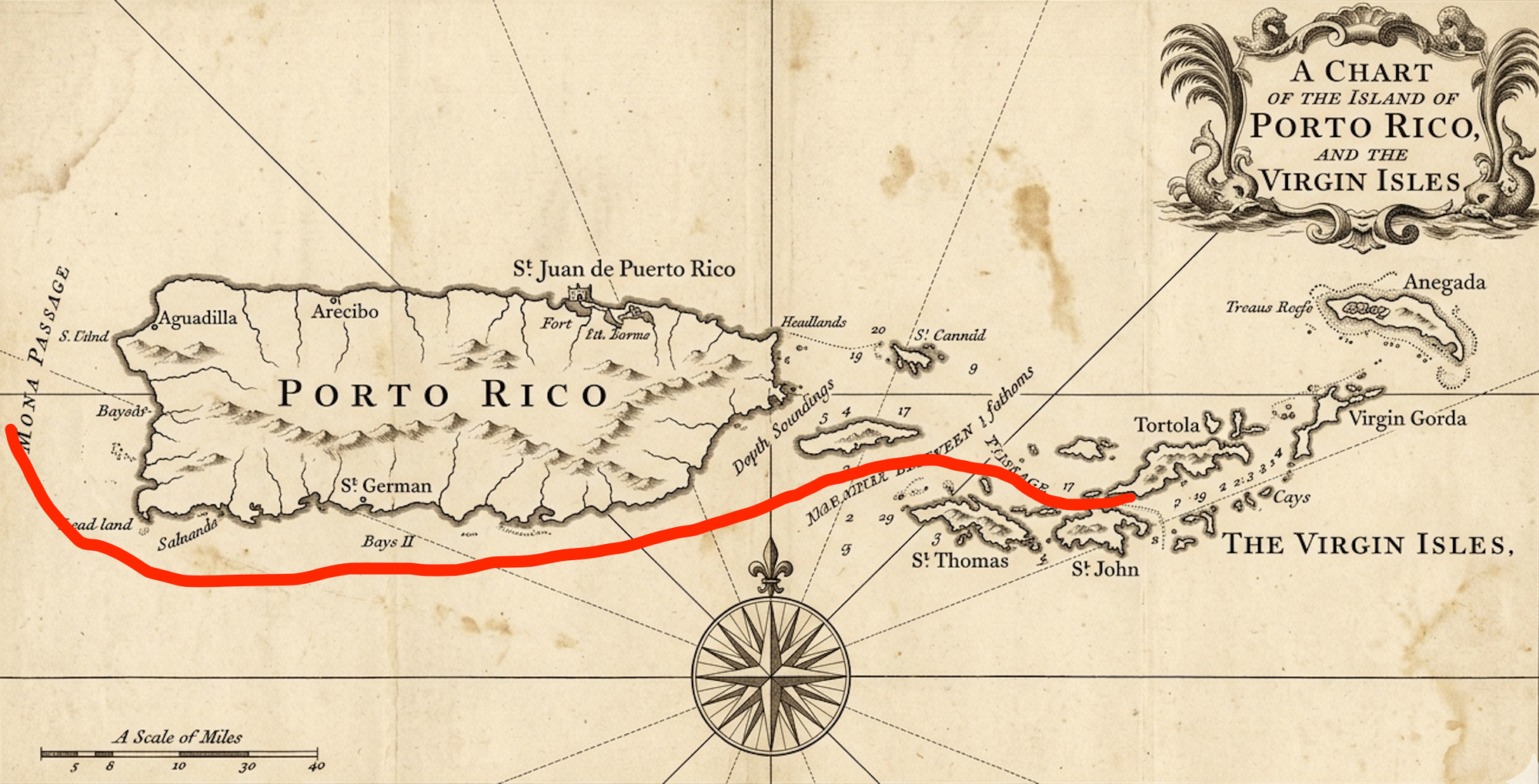
La Fortuna's Wake & Passage
Having just plundered the gold-laden sloop from occupied Grenada, Van Vries exploited unpatrolled waters to trade with Whistler & other English estate owners to resupply the ship while La Real dispatched from Cartagena.
Based upon the manuscript, Ife boarded La Fortuna in the late night or early morning hours on or around October 1st, 1780. She trapped herself in the ship's bilge for three to four days undetected, naked, starving, and disoriented by the thunder of a nighttime cannon exchange she did not understand as La Fortuna fired upon La Real. Once pulled from the dark, she had no clue of the piracy or imperial politics. She worried about her rapid distance from Tunde, but her own youth carried a fierce curiosity. Emerging on the deck, she found a world with no overseers where the vast horizon became a strange, newfound freedom, even if she had to share it with violent men.
The Great Hurricane of 1780
Referred to in contemporary logs as San Calixto, the hurricane that struck the Lesser Antilles in mid-October 1780 remains the deadliest Atlantic storm in recorded history. With estimated death tolls surpassing 22,000, it annihilated the region. The Empire navies, already fractured by global conflict, were caught brutally exposed in open water.
Winds estimated over 200 miles per hour stripped the bark directly from the trunks of trees. Storm surges left entire coastlines permanently rewritten overnight. For the crew of La Fortuna, already battered, broken, and stranded upon the jagged, uncharted coral of a remote atoll, the arrival of the storm's core meant enduring a cataclysm where the ocean turned to blinding white-water and the sky went black.
Though Ife's misconception of the eye of the hurricane sweeping over the lonely atoll pays off in the chronicle, the likelihood of her standing on the beach as the storm rages is a stark dramatization. However, the guarda costa's logs frequently refer to her as bruja (witch or sorceress) for reasons we can only speculate.
Los Lobos
The predatory faction hunting Ife and her crew is referred to as the Lobos. While Lobos dramatizes the chronicle and provides narrative ease, historical records of the late 18th-century Caribbean suggest the rogue guarda costa would've likely not given themselves a name. Because corruption and desertion were rampant, entire units ruled by the Spanish Crown organized outlaw bands to rob merchants and their own country's wealth. The chronicle suggests Los Lobos were one of these renegade groups.
Ife’s Age in 1780
With the timeline anchored firmly to October 1780 and the Great Hurricane, we can pin down Ife's age with hard historical context. Given that she was born, according to her dialogue with Van Vries, during the Seven Years' War (1756-1763), Ife stands anywhere from seventeen to twenty four years old when she flees the Whistler plantation and boards La Fortuna. Even Van Vries himself suggests the same to Ife, “Then you are seventeen. Or a score. Perhaps little more.”
Names of Interest aboard La Fortuna
- Van Vries – Captain of La Fortuna. A sea veteran with a cold, transactional intellect. His raid on the harbor at Saint George’s Town was a masterclass in opportunistic piracy.
- Piet – Ife’s confidant & the captain’s shadow. A fierce, loyal veteran. Despite his intimidating martial skill, he serves as Ife's singular anchor aboard the vessel.
- Casa – A black-bearded Spaniard who treats Ife with open contempt. A seasoned deckhand whose hostility adds constant friction to Ife’s survival within the cramped ship.
- Edward ("Ed") – A pragmatic Irish mariner whose small gestures of rough camaraderie help orient Ife to the new realities of life at sea.
- Mohammed (“Mo”) – The vessel’s navigator. Responsible for tracking the hazardous, deep-water shelves south of Porto Rico and threading the needle through the volatile Mona Passage without grounding the sloop prematurely.
- George – An old Englishman with a weathered white beard. A seasoned salt dog who keeps the vessel moving efficiently on a skeleton watch.
- Leech, Baron, & Kip – Three young English deserters known colloquially by Ife as “The Pissers.” Having abandoned their foot patrol, they are volatile and unprepared for the cataclysm awaiting them.
Nautical Terminology
- Berthdeck – The cramped living and sleeping deck located directly beneath the main deck.
- Bilge – The absolute lowest interior point of the ship's hull where foul water, grease, and waste collect.
- Bow – The forward-most section of the vessel.
- Bowsprit – The long, walkable spar extending horizontally past the bow to secure forward sails.
- Bulwarks – The woodwork or planking extending above the main deck to protect the crew from sea spray and incoming fire.
- Capstan – A massive, vertical rotating axle spun by the crew using wooden bars to haul up the heavy anchor lines.
- Frock – A durable, loose-fitting outer canvas or linen shirt favored by common sailors and laborers.
- Gunwales – The upper edge and top planking along the ship’s hull side.
- Hardtack – A brutally dense, baked flour-and-water biscuit; infamous for lasting months at sea but easily infested with weevils.
- Helm – The mechanical wheel or tiller arm used to control the vessel's steering rudder.
- Holystone – A brittle, porous block of soft sandstone used to scrub grime and salt from the wooden deck.
- Hull – The watertight structural exterior of a ship.
- Jolly Boat – A smaller, nimbler utility craft used for routine ship-to-shore transit and light tasks.
- Keel – The heavy, bottom-most structural timber running along the center of the boat’s exterior; the ship's backbone.
- Larboard – The left side of the vessel when facing forward; routinely replaced by the term port later to avoid confusion with starboard.
- Longboat – The largest, sturdiest utility craft carried aboard, used for heavy hauling, anchoring, and amphibious landing.
- Muzzle – The open end of a cannon barrel where the round shot exits.
- Quarterdeck – The raised aft deck, typically housing the captain’s station, the helm, and the cabin structure beneath.
- Rigging – The network of ropes, cables, blocks, and chains used to support the masts and control the canvas.
- Rudder – The submerged steering blade hung at the stern that dictates the ship's direction.
- Scuppers – Drainage holes cut through the bulwarks to allow trapped deck water to wash back overboard.
- Sloop – A small, fast-moving, single-masted watercraft; the preferred vessel for shallow-water piracy due to its speed and low draft.
- Spar – Any long, rounded piece of timber—including masts, yards, and booms—used to support the sails and rigging.
- Starboard – The right side of the vessel when facing forward.
- Stern – The rear-most or back section of the ship.
- Tallow – Rendered animal fat used to lubricate block rigging, grease leather equipment, or seal seams.
- Turp – Historical shorthand for turpentine; a distilled fluid used to thin heavy pine tar and pitch before application to the hull.