Chronicle Notes: PART III - Amaguya & Yabaque
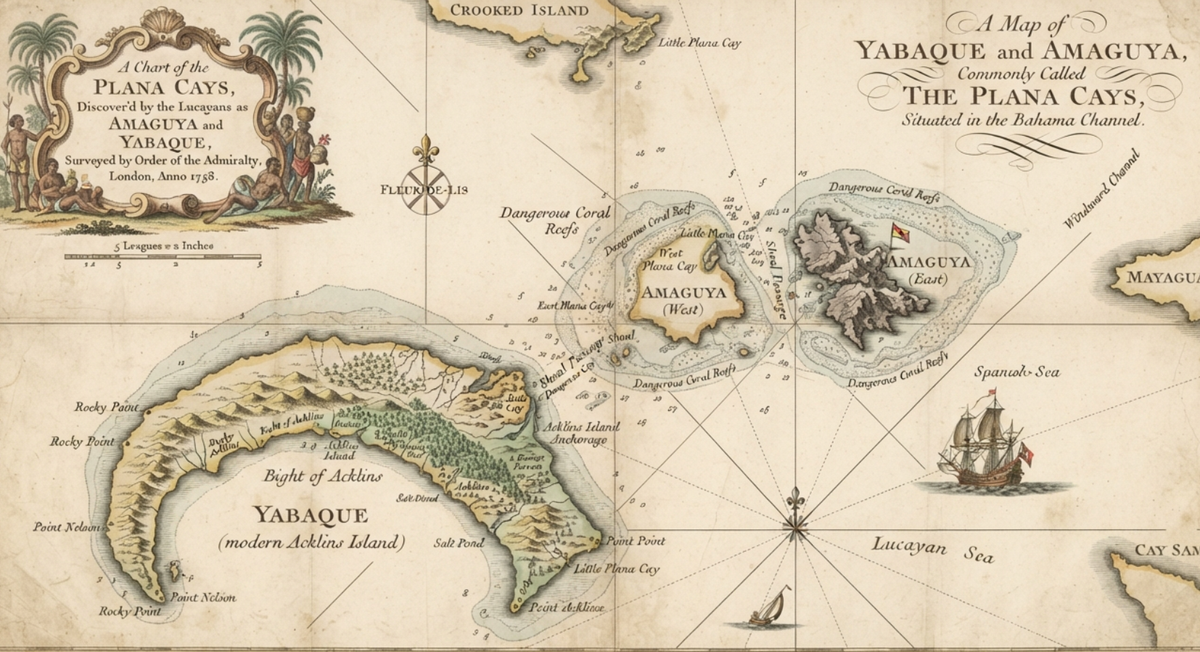
- Temporal Scope: Approx. October 16 – November 20, 1780.
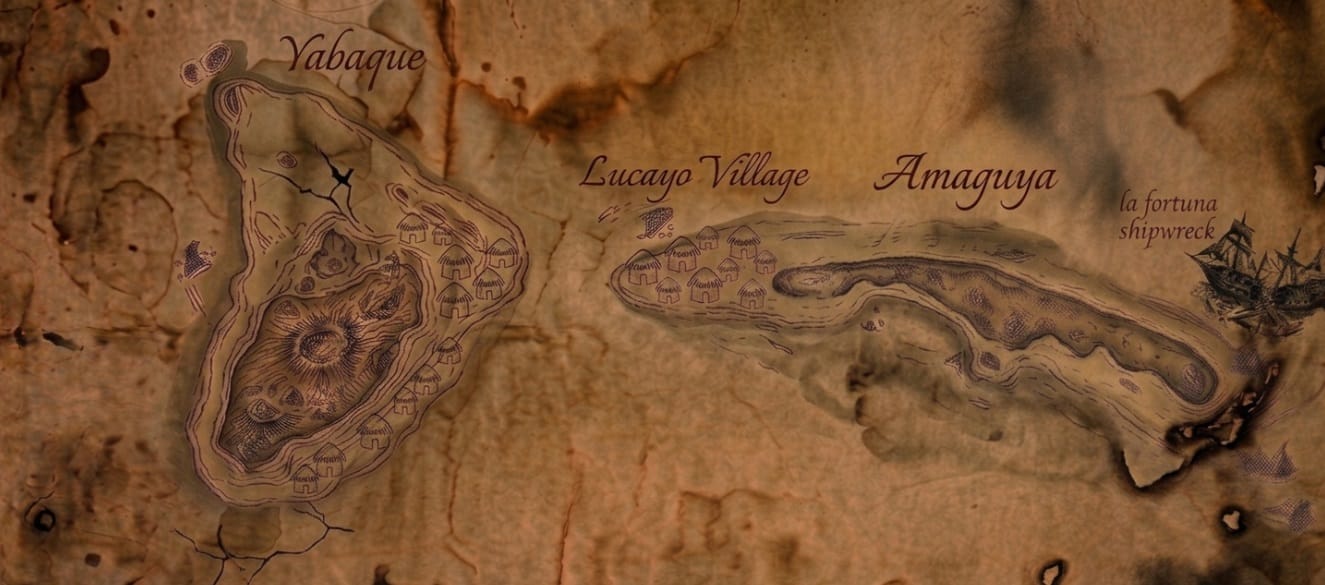
- The Setting: The white sand shores and dense forests of Amaguya.
- The Context: This third volume grounds Ife on an isolated island, finding sanctuary amongst the Lucayo. Her bond with a young woman named Aniki is shattered when her reunited crew introduces smallpox, erasing the final remnant of an entire people.
Lucayo Traditions
Because the Caribbean islands lacked large mammals, the Lucayans constructed a wooden slit-drum carved out of a hollowed-out tree trunk. It featured an H-shaped slit on top and was struck with wooden mallets. Its deep, hollow resonance could carry over massive distances through the coastal air.
The use of a ground conch shell to signal the onset of the ceremony is a staple of Lucayan archaeology. Beyond serving as a daily dietary baseline, Queen Conch shells were meticulously repurposed into tools and trumpets, blown to pierce the quiet of the sea and gather the village together.
Dances were held in dedicated public plazas or central grounds. The movements typically featured the entire community forming circles or lines, swaying, stepping, and locking arms in fluid, call-and-response patterns led by a ceremonial singer or leader.
Using the abundant thatch palms native to cays like Amaguya, Lucayan women used twining, plaiting, and coil-weaving techniques. They crafted baskets, storage mats, and fish traps designed to survive harsh saltwater exposure.
The term canoe originates from the Arawakan word kanoa. These vessels were carved from a single, massive tree trunk. Because they lacked iron tools, the Lucayans lit controlled fires at the base of a tree, scraped away the charred wood with sharp conch-shell, and repeated the process until the tree fell and the interior was entirely hollowed out.
Other words originating from the Arawak language used in the text include: barbacoa (barbecue), tobako (tobacco), hamaka (hammock), huracán (hurricane).
Ife's Cohoba Experience
In the text, individuals purge before the ceremony which aligns with historical descriptions of indigenous Caribbean rituals. In Taíno and Lucayan traditions, ritual purification and fasting were practiced prior to entering an altered state, ensuring the participant was physically prepared for communication with the spiritual realm.
The physical reaction described—convulsions, heavy limbs, and entering a trance state—reflects historical accounts of the ingestion of Cohoba, a sacred snuff ground from the seeds of the Anadenanthera peregrina tree. It was traditionally used by chiefs and shamans to commune with the zemís (deities or ancestral spirits).
The Extinct Bahamian Hutia
In the text, the villagers roast and consume hutia (Barbacoa), reflecting the primary terrestrial protein source for islanders before European contact. Archaeological evidence from Lucayan and Taíno sites shows that these stout, rabbit-sized rodents were heavily hunted using nets, snares, and dogs. Because the islands lacked large native land mammals, the hutia played a critical role in pre-Columbian diet, roasted whole over open wood frames—a culinary practice that Spanish colonizers observed and adopted, eventually giving rise to the modern word barbecue.
Theories on Small Pox Outbreak
Because smallpox was endemic in crowded port cities, the vast majority of European sailors had survived it in childhood and were completely immune. Conversely, indigenous western populations were highly susceptible. There are multiple theories for how the "speckled monster" spread.
By the 1770s, it was standard practice in the West Indies for planters to hire traveling physicians to perform mass variolations on all plantation-born infants and newly arrived slaves. Although not documented in the chronicle, Ife could have been forcibly inoculated as a young child. Otherwise, her exposure to the Whistlers or other infected captives could have made her immune.
When the fascinated Lucayo children crowd around Edward, running their fingers through his hair, the dry virus particles rub off onto their hands. Plus, as the tattoo artist cuts into Edward's back, he inadvertently innoculates himself
Lucayan spoken by Aniki and the Lucayo:
Source Citation: Bennett, John Peter. "Arawak-English Dictionary." Walter Roth Museum of Anthropology, Georgetown, 1989.
- Abakhoro — No.
- Barbacoa — Barbecue.
- Bethetho — Female friend.
- Bikidoliano — Youth; the younger generation.
- Chicha — Fermented alcoholic beverage.
- Chilikíchi — The brother of a female.
- Dise — Wild game (animals, birds, or fish hunted for food).
- Ehei — Yes.
- Halichi — Potato.
- Hiaro — Female.
- Hokoraro — Rodent (applicable to the Bahamian Hutia native to the Plana Cays).
- Ibinahu — Dance.
- Ida — A bowl or a maraka (ceremonial rattle).
- Kabuja — Death-like.
- Kachi — Moon.
- Kamunashi — Longing or desire.
- Karokuri — Gold.
- Kayetho — Female partners.
- Koriaróchi — A guest of the male sex.
- Koriarótho — A guest of the female sex.
- Lokobe — People.
- Umybayo — Perceived variant; possibly a Kalinago word for "evil."
- Wakhaia — Wicked, vicious, abhorrent, evil, or malicious.